In the Mood for Love, 花樣年華, is a 2000 film directed by Wong Kar-Wai, and it is probably one of my favourite movie of all times. The movie centres around Chow Mo-Wan (played by Tony Leung) and Su Li-Shen (played by Maggie Cheung), two lonely souls that find company in each other. Today, I’ll be reflecting on some interesting things that I’ve come to realize after many screenings of the film.
Mahjong as An Analogy
The mahjong room itself is a metaphor for society. Since the movie takes place in a more conservative era, married people are supposed to act and behave in certain ways. This is seen in the movie as the neighbours criticize Su Li-Shen for the way she dresses while getting takeout and also when they urge her to rectify her relationship with her husband, stating that a married woman should know her place. It would also be unusual for a married person to have friends of the opposite sex. The mahjong room appears when Su is criticized by her landlord for always going out. Su stays and watches her landlord and neighbours play mahjong instead of joining Chow in writing martial arts stories. This illustrates once again how Su chooses to conform to the societal views of a married woman, instead of following her heart’s desires. Furthermore, Chow and Su were forced to stay in Leung’s room when their neighbours unexpectedly came home early from dinner. While the neighbours played mahjong for the whole night, Chow and Su stay hidden in the room. The mahjong room once again stands for society and its view; Chow and Su are hiding away from society as their actions do not conform to the social views of a married person.
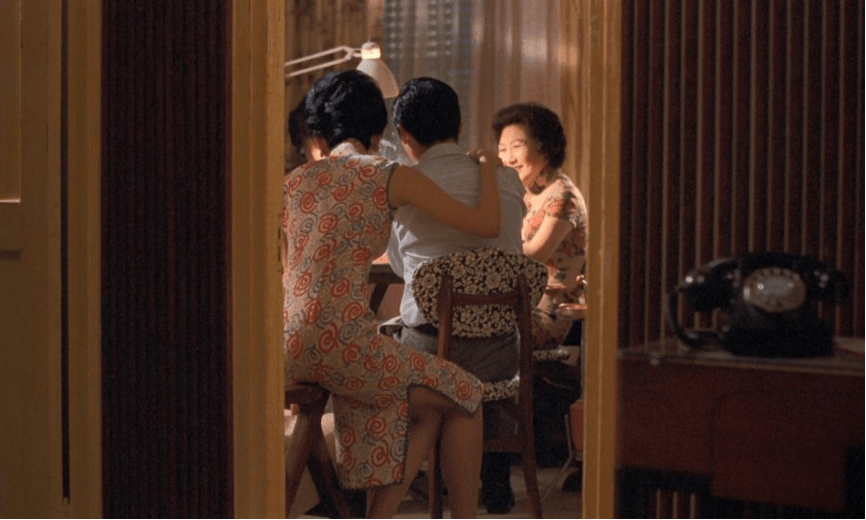
The mahjong scene near the beginning of the movie also strengthens this point. This scene begins with Su Li-Shen’s spouse playing mahjong with the neighbours. Su walks in and subsequently, Chow Mo-Wan’s spouse comes in the scene and joins the game. From his wife’s arrival, Chow (who was playing but not seen) leaves the table while Su stays to watch everyone play. This foreshadows how the movie ends; Chow leaves his wife, while Su decides to stay with her husband. Chow is leaving the mahjong room and rejecting societal standards for a married person, as he chooses to divorce, while Su stays to observe but not participate— her heart is not with her husband, but she chooses not to leave her marriage.
Continuous Foreshadowing
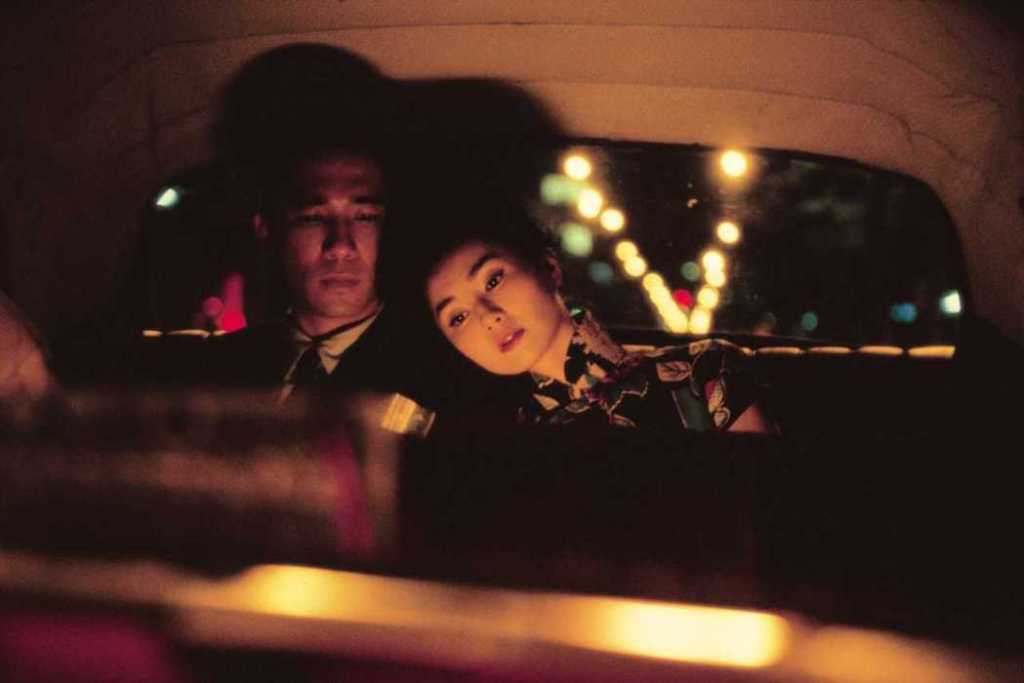
Apart from the mahjong scene, the scenes where Chow and Su act as their spouses also foreshadow the end of the movie. In this scene, Su act as Chow’s wife and flirts with him (Chow is acting as Su’s husband). In their first reenactment, Chow says “Let’s not go home tonight”, which is not taken well by Su, who believes her husband would not take the initiative. In their second reenactment however, she can not bring herself to take the initiate, while Chow reminds her that one of them must have said it first. The reenactment of their spouses foreshadows how, like their spouses, they will fall in love, and one of them will eventually “say it first”. In the end of the movie, Su and Chow confesses their feelings for each other, and in a taxi Su says “I don’t want to go home tonight”. This time Su understands the truth, and she follows her heart by taking the initiative.
Timing is a Major Theme
All of this makes me wonder: what if the story has taken place in another era, like the present? Do you think that In the Mood for Love would still be In the Mood for Love? The movie takes place in the 1960s where people are more conservative. As humans, we are always bounded by our time, our particular era and the social rules within them. Would the two main leads decided differently if they were not restricted by the thinking of the people around them? Maybe if Chow and Su lived in the 21st century, both of them would be willing to divorce and end up together.
The past is a secret?
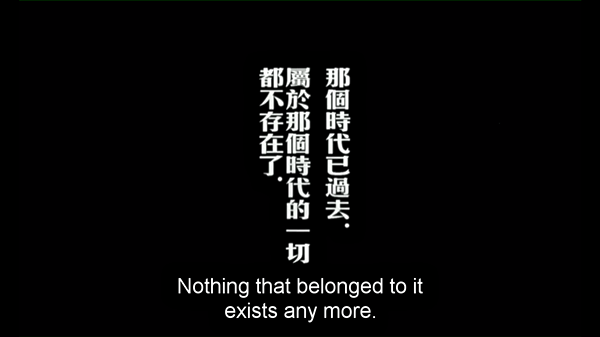
Sure, the future is a mystery as well since no one knows what would happen, but I think this movie is trying to tell us that the past has its own mystery; as people of this era, we can never understand how the characters are affected by their time, how their actions and behaviours may be dictated by the people around them. Records may only teach us about the past from a certain perspective, and history has proven that there are many ways to look at one situation. For that reason, the past is secretive in the sense that once the era as has passed, we can no longer hold onto it.

 Awaken your dreams
Interesting analogy of this film. Thank you
LikeLiked by 1 person
You’re welcome! Glad you enjoyed it 🙂
LikeLiked by 1 person